

Retail and e-commerce
Fashion and apparel retail
Size and color variants, season-based buying and markdowns, and stock moved to the stores where each size sells.
The problem
What breaks today, and what we usually build
What breaks today
One style comes in a dozen size and color variants, so stock reports are too long to act on. Buying is planned in spreadsheets, end-of-season markdowns are applied store by store, and the right sizes sit in the wrong stores.
What we usually build
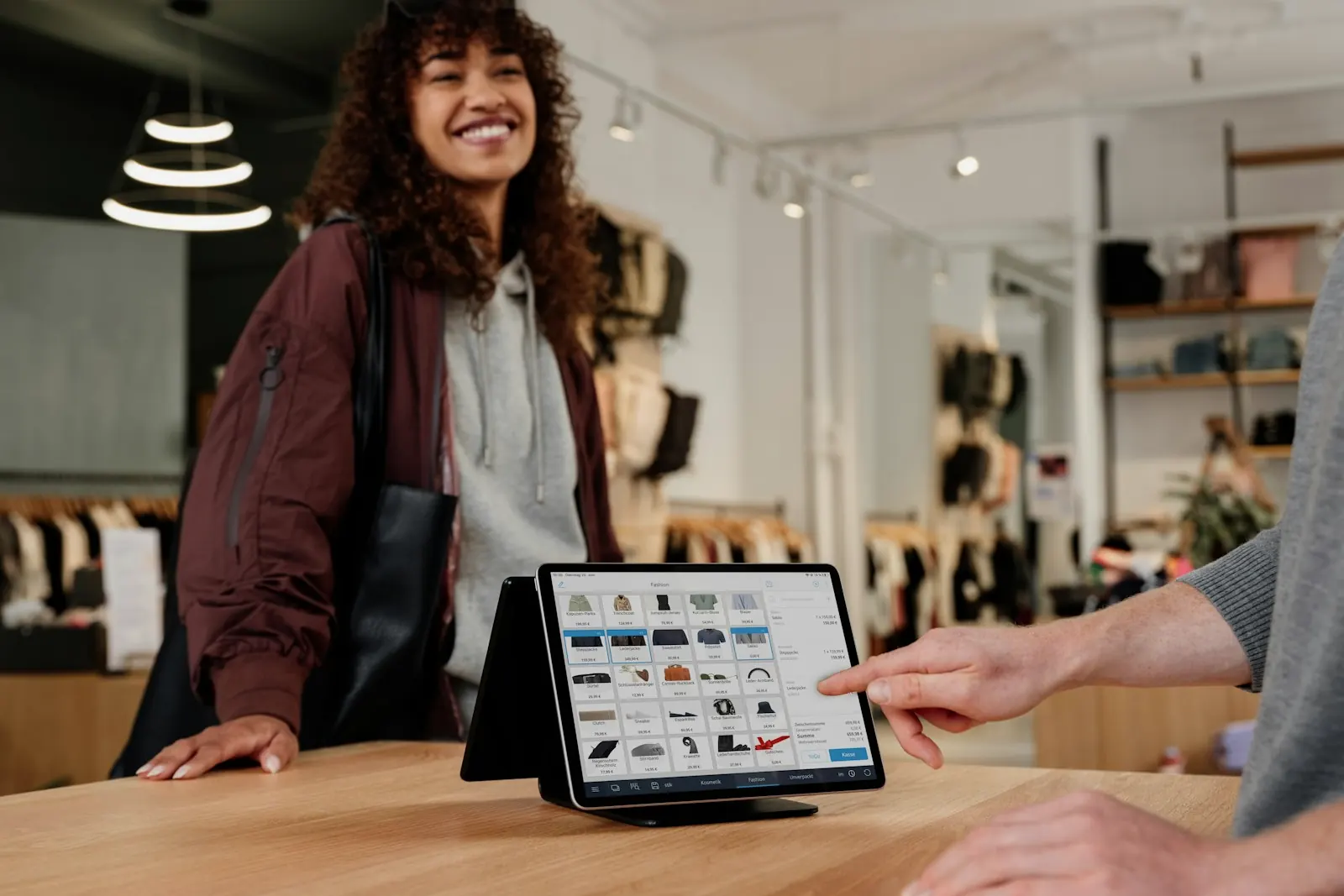
Inventory and point of sale built around style, size and color, season and collection tags for buying, central markdown rules, and transfers suggested from sell-through by store.
Automations worth building
Markdowns applied to every channel on the same date, transfer suggestions from sell-through by size, and loyalty offers sent based on purchase history.
What we measure in discovery
Sell-through by style and size, stock left at season end, time to apply a markdown across stores.
Systems it usually connects to
- E-commerce platforms such as Shopify or Magento
- Marketplaces such as Myntra, Amazon or Zalando
- Label and barcode printers
- Loyalty and SMS tools
- Tally or QuickBooks during a phased move
Rules
Rules your systems have to follow
What each rule means for your systems. Your counsel and accountants confirm what applies to you; we build the controls and reports.
GST on apparel (India)
The GST rate on clothing depends on the sale value per piece, so the till must apply the rate on the final price after discounts.
Textile fiber and care labeling (US)
Garments carry fiber content, country of origin and care instructions, so these belong on the product record and flow to labels and online listings.
EU Textile Regulation
Textile products sold in the EU state fiber composition using the regulation's fiber names, so product data must hold composition in that form for each market.
Where we fit
We fit apparel brands and multi-store retailers who need variant stock, buying and markdowns in one system. We do not do merchandise planning or design product lines; we give your buyers the data to do it.
Modules
The business modules we usually start with
- Point of SaleStore tills that keep selling when offline
- Inventory & WarehouseBarcode bin tracking across every warehouse
- Purchase & VendorsRFQs, approvals and contracted vendor rates
- CRMEvery inquiry routed, every follow-up tracked
- AI Review & Reputation ManagementAI automation with human approval
- Omnichannel Unified AI InboxAI automation with human approval
- AI Customer Support AgentsAI automation with human approval
Platforms
Platforms that usually fit
Odoo point of sale and inventory with variants for brands and chains; Shopify connected to Odoo or Dynamics 365 where online leads.
Where to start
Fixed-scope offers to begin with
Each ends with a written deliverable you can use with any vendor, including us.
More in Retail and e-commerce
Other retail and e-commerce sectors
- Electronics retailSerial and IMEI tracking from purchase to sale, warranty and repair records per unit, and finance offers at the till.
- Furniture and homeMade-to-order and stocked items sold together, delivery and installation scheduled, and customer advances tracked per order.
- Grocery and FMCGFast billing at busy tills, weighed and packed goods, expiry control and replenishment from daily sales.
- JewelryPieces tracked by weight, purity and hallmark ID, priced from the day's metal rate, with old gold exchange handled at the counter.
FAQ
Questions about fashion and apparel projects
Fit, rules, platforms and where to begin.
Ask us directlyCan one style hold all its sizes and colors without a separate product each?
Yes. A style is one product with variants, so reports roll up by style and drill down by size and color, while each variant keeps its own barcode and stock.
Can store transfers be suggested automatically?
Yes. Sell-through by size and store is compared against stock on hand, and transfers are proposed for a manager to approve rather than moved blindly.
Which platform fits fashion and apparel retail?
Odoo point of sale and inventory with variants for brands and chains; Shopify connected to Odoo or Dynamics 365 where online leads. We confirm the fit in a platform selection, with written reasons for and against each option.
Where do we start?
With the Operations & Systems Diagnostic: find out what is really slowing the operation down. It ends with a written deliverable you can use with any vendor, including us.
Next step
Not sure what to fix first?
Book a 30-minute consultation. We look at how your operation runs and tell you what we would do first, including when the answer is a simpler tool.