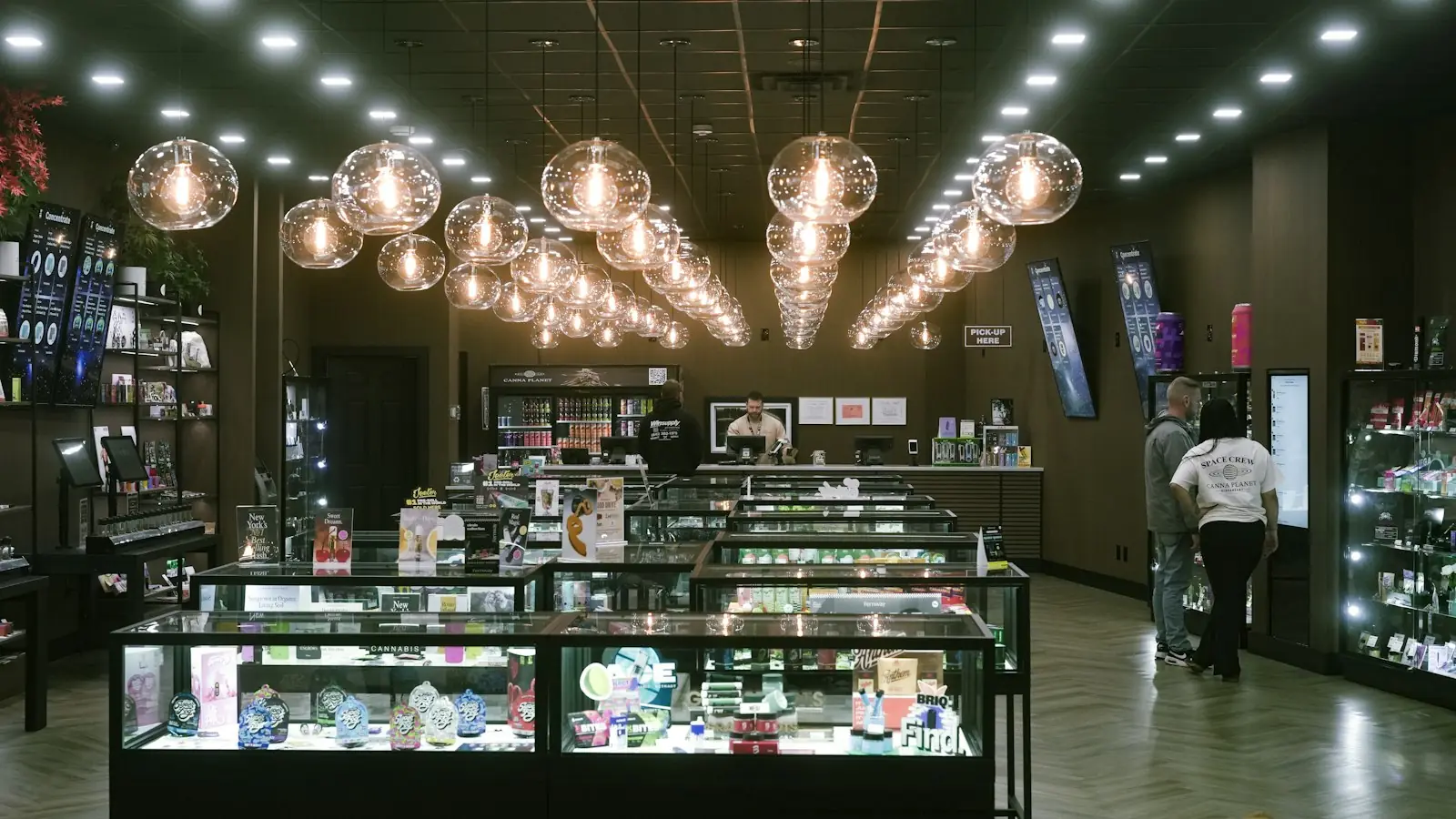
When the internet goes down, our stores cannot ring up customers and lines form out the door.
Lost retail revenue and frustrated walk-outs.
M-07 · Revenue & Sales
Retail and counter POS that never stops running, even when your internet drops
Why the current way breaks
When the internet goes down, our stores cannot ring up customers and lines form out the door.
Lost retail revenue and frustrated walk-outs.
What we build
Full local browser storage allowing continuous checkout, receipt printing, and cash drawer triggers with automatic background syncing upon reconnect.
IndexedDB client persistence, conflict-free replicated data types (CRDT).
Offline-capable
Store tills
Sales keep recording through an internet outage and sync afterwards.
Live
Stock and sales back to head office
No end-of-day upload.
We measure your baseline in discovery and report against it. No borrowed percentages.
Automation built in
Sale completed at physical register immediately updates online e-commerce inventory to prevent accidental overselling.
Services
Buy one service or the whole set. Each card links to the page that covers it in depth.
Approach map · Business systems implementation
Open any stage to see what we do, what you receive and what we need from you.
We sit with the people doing the work and map how orders, stock and money actually move today, including the spreadsheets nobody mentions in the first meeting.
Critical spreadsheets that management does not know staff rely on.
We design the data model, roles, approval rules and integrations on paper before anything is configured.
Sales and warehouse asking for conflicting things mid-build.
We provision environments, configure the standard modules to the blueprint, and build any approved extensions.
Configuration drifting away from what was agreed in the blueprint.
We extract customers, vendors, products and balances from your current tools, remove duplicates and load trial datasets you can check.
Bad legacy data being carried into the new system on day one.
We connect the system to the tools that stay: banks, e-commerce stores, payroll, shipping and anything else agreed in the blueprint.
Silent sync failures that nobody notices until month-end.
Your staff test real scenarios in staging and learn the system role by role, with recorded guides they can return to.
Staff meeting the system for the first time on go-live day.
We freeze the old system, move the final changes across, verify opening balances and switch over, usually across a weekend.
Downtime during trading hours.
The team that built the system stays on it after go-live: fixing issues on the day they surface, adjusting screens staff struggle with, and sitting with finance through the first month-end close.
Early friction pushing staff back to the old spreadsheets.
With clean data in one system, we automate the repetitive work around it: invoice capture, reorder drafts, approval routing and alerts.
The new system settling into a passive record-keeping tool.
Supported platforms
 ERPNext & Frappe
Best whenCompanies wanting complete software and data sovereignty without vendor lock-in.
Platform details
ERPNext & Frappe
Best whenCompanies wanting complete software and data sovereignty without vendor lock-in.
Platform details
 Odoo Enterprise
Best whenCompanies wanting ERP, CRM, Inventory, and Accounting unified in one single database without brittle connectors.
Platform details
Custom core
Best whenYour process is your advantage and no platform's standard flow fits it.
When we build custom
Odoo Enterprise
Best whenCompanies wanting ERP, CRM, Inventory, and Accounting unified in one single database without brittle connectors.
Platform details
Custom core
Best whenYour process is your advantage and no platform's standard flow fits it.
When we build custom
Hardware & ecosystem connectivity

Barcode & RFID
Zebra, Honeywell, GS1-128 scanners


Shipping & logistics
FedEx, UPS, DHL, ShipStation


Payments
Stripe, Razorpay, Adyen, ACH & SEPA

Messaging
WhatsApp Business API, SMS, email


Commerce
Shopify, WooCommerce


Event streaming
Apache Kafka, RabbitMQ, Redis

Identity & SSO
Okta, Entra ID, OAuth 2.0, SAML 2.0

Document AI
Claude, OCR engines, form recognizers
For the technical evaluator
Data model and deployment guardrailsData model & schema
POS Session, Orders, Order Lines, Payments, Cash Control, Loyalty points.
Migration & cutover
Product barcode catalog import, opening register float calibration.
API surface & webhooks
IoT Box hardware protocol (ESC/POS, payment terminal API).
Deployment & hosting
PWA application on Android tablets, iPad, or Windows POS touch terminals.
Client work
FAQ
Cost, timeline, data migration and what we need from your team, answered plainly.
Ask us directlyStandard USB and Bluetooth barcode scanners, ESC/POS thermal receipt printers, electronic scales, and integrated credit card payment terminals.
For a connected business

Next step
Book a 30-minute consultation, or start the configurator with this module already selected.
First call: 30 minutes · A senior consultant, not a sales rep