Engineering governance · the IDEA framework

Predictable engineering, not open-ended agency retainers

Four stages, each with a gate and a deliverable. Nothing gets built until the data design is signed off.

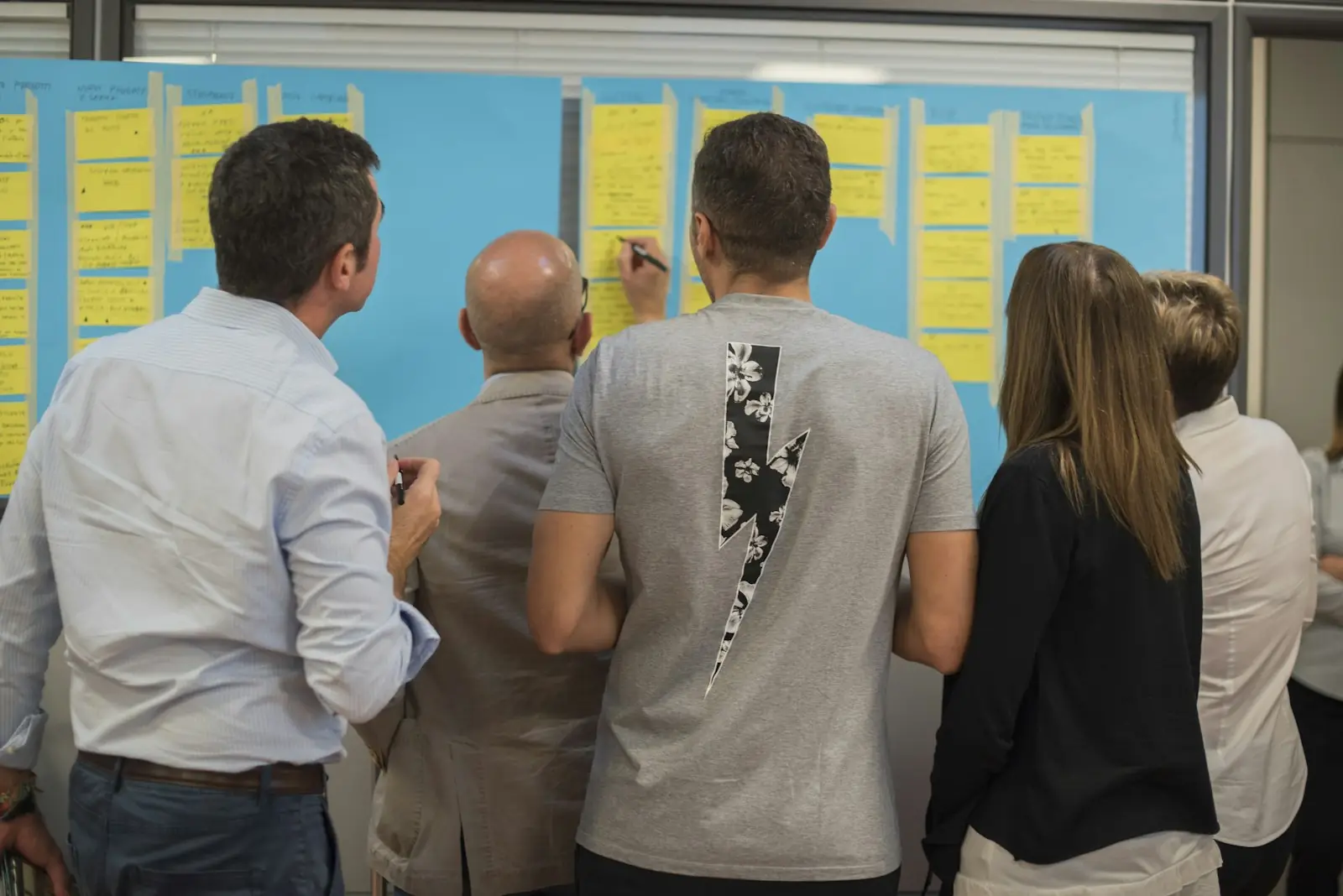
A team reviewing sticky notes on a planning wall

The IDEA framework

Four stages, each with a gate

I Stage 1

Identify

We sit with floor staff, find the spreadsheets nobody mentions, and locate the real bottleneck rather than its symptoms.

  • Current-state process map
  • Data-quality audit and cleansing requirements
  • Hours-lost baseline to measure against
  • Milestone-based scope of work
What we need from you
  • Access to current dashboards and spreadsheets
  • A sample export of master records, under mutual NDA
  • Two-hour interviews with each department lead

D Stage 2

Design

We model the data, user permissions and approval rules on paper before anything is configured or coded.

  • Entity-relationship model and data dictionary
  • API and webhook contracts
  • Approval-gate and exception rules
  • Isolated staging environment
What we need from you
  • Review and sign-off of the data model
  • Your approval thresholds (e.g. POs above $5k)
  • IT access to provision a staging environment

E Stage 3

Engineer

We set up environments, configure modules, build the integrations and run trial migrations you can check.

  • Configured modules and custom extensions
  • Tested integrations
  • Migration scripts with checksum verification
  • Signed UAT matrix and recorded training
What we need from you
  • A 45-minute sprint demo every two weeks
  • Key users testing in staging
  • Spot-checks of migrated data

A Stage 4

Automate

With clean data in one place, we automate the paperwork around it, with a person approving anything above your limits.

  • Production cutover with verified opening balances
  • Four weeks of hypercare from the build team
  • Live automation workflows
  • Monthly report of hours recovered
What we need from you
  • A cutover window, usually a weekend
  • Staff at 30-minute role walkthroughs
  • Feedback in the weekly hypercare review

Approach maps

How each type of engagement runs

Pick your engagement type, then open any stage.

ERP, CRM, accounting, inventory and other core business systems

We sit with the people doing the work and map how orders, stock and money actually move today, including the spreadsheets nobody mentions in the first meeting.

What happens

  • Process walk-throughs with key users
  • Inventory of every data source
  • Quantifying where time is lost

What you get

  • Current-state process map
  • Data source and quality audit
  • Scope baseline

What we need from you

  • Sample invoices, orders and spreadsheets
  • Two-hour interviews with each department lead

Risk handled

Critical spreadsheets that management does not know staff rely on.

We design the data model, roles, approval rules and integrations on paper before anything is configured.

What happens

  • Data model design
  • Chart of accounts review
  • Approval matrix design

What you get

  • Solution blueprint document
  • Role-by-role screen wireframes
  • Data dictionary

What we need from you

  • Sign-off on the chart of accounts and permission structure

Risk handled

Sales and warehouse asking for conflicting things mid-build.

We provision environments, configure the standard modules to the blueprint, and build any approved extensions.

What happens

  • Environment setup and hardening
  • Module configuration
  • Approved custom development

What you get

  • Working staging environment
  • Configured modules matching the blueprint

What we need from you

  • Tax settings, bank details and branding assets
  • Named admin users

Risk handled

Configuration drifting away from what was agreed in the blueprint.

We extract customers, vendors, products and balances from your current tools, remove duplicates and load trial datasets you can check.

What happens

  • Migration scripts
  • Duplicate detection
  • Trial balance reconciliation

What you get

  • Staging database loaded with cleaned data
  • Reconciliation sheet

What we need from you

  • Decisions on flagged duplicates
  • Lists of inactive products and customers to archive

Risk handled

Bad legacy data being carried into the new system on day one.

We connect the system to the tools that stay: banks, e-commerce stores, payroll, shipping and anything else agreed in the blueprint.

What happens

  • API and webhook connectors
  • Error handling and retries
  • End-to-end integration tests

What you get

  • Tested integrations in staging
  • Integration runbook

What we need from you

  • API credentials and vendor contacts for connected systems

Risk handled

Silent sync failures that nobody notices until month-end.

Your staff test real scenarios in staging and learn the system role by role, with recorded guides they can return to.

What happens

  • Role-based training sessions
  • Scenario testing
  • Fix sprints on UAT findings

What you get

  • Signed UAT test matrix
  • Recorded training library

What we need from you

  • Key users available about four hours a week for testing

Risk handled

Staff meeting the system for the first time on go-live day.

We freeze the old system, move the final changes across, verify opening balances and switch over, usually across a weekend.

What happens

  • Final delta migration
  • Opening balance verification
  • Hardware and scanner checks

What you get

  • Live production system
  • Signed cutover checklist

What we need from you

  • A data-entry freeze on the old system at an agreed time

Risk handled

Downtime during trading hours.

The team that built the system stays on it after go-live: fixing issues on the day they surface, adjusting screens staff struggle with, and sitting with finance through the first month-end close.

What happens

  • Daily check-in with your project lead
  • Same-day fixes and small adjustments
  • First month-end close support

What you get

  • Hypercare issue log with resolutions
  • First month-end close sign-off

What we need from you

  • A 15-minute daily call with your project lead
  • Staff reporting problems as they happen, not at the end of the week

Risk handled

Early friction pushing staff back to the old spreadsheets.

With clean data in one system, we automate the repetitive work around it: invoice capture, reorder drafts, approval routing and alerts.

What happens

  • Automation opportunity review
  • Workflow and agent build
  • Monitoring and tuning

What you get

  • Live automation workflows
  • Monthly report of hours recovered

What we need from you

  • A ranked list of the bottlenecks you want gone next

Risk handled

The new system settling into a passive record-keeping tool.

Governance

How the work stays visible

What you can check at any point, without waiting for a status meeting.

Cadence and reporting

  • WeeklyDemo of working software and a written summary
  • FortnightlySteering review with your decision-makers
  • Always onShared task board you can open at any time
  • GatesUAT sign-off and a go/no-go before every cutover
  • EscalationA named project lead, with a direct line to the architect

Your repository, from day one

Code, migration scripts and infrastructure configuration are committed to a repository you can see throughout the build.

Four weeks of hypercare

After go-live, the engineers who built the system stay on it for four weeks to answer questions, tune thresholds and fix edge cases.

Client work · published with client consent

Read how we ran real projects: the problem, the system we built and what changed, each published with the client's written consent.

See client work

Next step

Plan your next project with a clear map

A 30-minute call with a systems architect. We outline what discovery would cover for you.

Book a consultation Scope your project

First call: 30 minutes · A senior consultant, not a sales rep