01
The dilemma
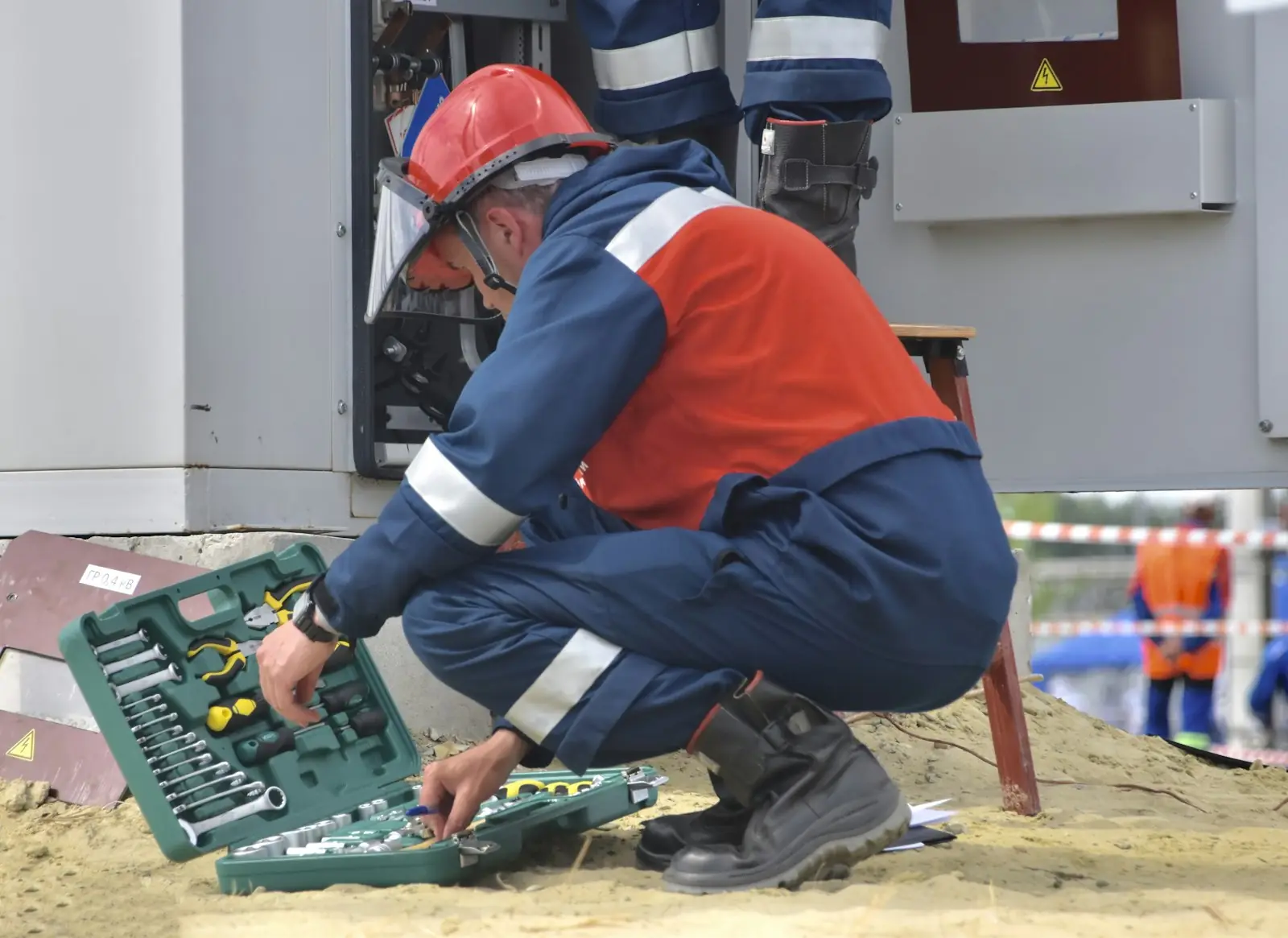
Technicians spent days on sites with no cellular reception. Inspections were handwritten on cards that went missing. Equipment hours went unbilled, and preventive service slipped because the card never made it back.
What was breaking
- Paper did not survive the site. Cards were lost between the machine and the office, so completed work never became an invoice.
- No signal meant no record. Anything that needed the office network waited until the technician was back, sometimes days later.
- Service intervals were guesses. Without a reliable hour reading, preventive work was scheduled late or not at all.
The cost of standing still
Unbilled hours and missed services are the same failure: the work happened, and the system never heard about it.
02
The idea
Let the technician finish the inspection, the signature and the draft bill on the device, then sync when a network exists. The office system should receive a complete job, not a stack of cards.
The principles we worked to
- Offline is the normal case. The app stores the job locally and queues the sync. Loss of signal is not an error.
- Sign-off on the glass. The site foreman signs on the device, with a timestamp, before the technician leaves.
- Hours drive the invoice. Rental billing uses the readings captured on site, not a reconstruction a week later.
What we ruled out, and why
| Option considered | Why we did not take it |
|---|---|
| A paper form with a weekly upload | That was the process already failing. The gap was the days between the site and the office. |
| An online-only app | The sites that matter often have no reception. An app that needs a signal does not get used. |
03
The build
Zoho stayed the system of record. The phone held the job until it could connect.
Asset record in Zoho
Zoho CRM and Creator hold the fleet, the rental and the service history, with a small API in front of them.
Offline mobile app
A React Native app with a local SQLite store. Jobs queue in the background and sync when the network returns, including conflict handling.
On-site certificate
A Bluetooth printer produces a service certificate for the foreman, and the signature stays on the job.
Billing and service intervals
Invoices use the captured equipment hours via Stripe billing. Service orders open at the 250-hour engine interval instead of waiting for a lost card.
04
The impact
| Measure | Before | After |
|---|---|---|
| Invoice turnaround | 11 days | 2 hours after the job syncs |
| Unbilled equipment hours | Common when cards were lost | Hours captured on the device before the technician leaves |
| Maintenance intervals | Missed when the paper did not return | Service orders open from the recorded hours |
Beyond the numbers
- The site visit is the record. Sign-off, hours and the certificate exist before anyone is back in the office.
05
What comes next
The offline loop is in use. Next is extending it to more of the fleet.
- More asset types on the same interval rules.
- A dispatcher view of which jobs are still waiting to sync.
Engagement delivered by the Ideentrix founding team. Technologies, scope and outcomes as recorded at project close, published with the client's consent.