01
The dilemma
A technology company was running its own operations on infrastructure it would never have recommended to a client. Three systems had each hit their limit at roughly the same time, and the gaps between them were being covered manually.
What was breaking
- The HRMS could not scale. It had been adequate at an earlier headcount and was now a constraint on hiring, onboarding and leave management.
- Project management was straining. Complex client projects were difficult to handle in the existing platform, and project data did not connect to anything financial.
- Accounting was on-premise and legacy. Which meant finance was tied to a location and to a system that could not integrate with how the business actually worked.
- No operational dashboards. Leadership had no consolidated view of delivery, utilization or cash conversion.
- The gap between delivery and cash was manual. Work delivered, invoices raised and payments collected were tracked in three places and joined up by people.
The cost of standing still
For a professional services business, the distance between delivering work and collecting cash is the whole economic model. Every manual handover in that chain is working capital sitting still and margin leaking invisibly.
02
The idea
The client framed this as three separate replacement projects. We argued it was one: the systems were failing at the seams, not in the center, and replacing them individually would preserve the seams. We designed a single integrated operation running from project delivery through to cash, with the existing Salesforce and learning management investments integrated rather than displaced.
The principles we worked to
- Design for the seam, not the module. The value was in project data flowing to billing flowing to cash, not in any single component.
- Keep what works. Salesforce and the LMS were integrated, not replaced. Rip-and-replace where there is no case for it is vanity, not strategy.
- Employee lifecycle as one continuous record. Onboarding through separation, without re-keying.
- Dashboards as a first-class deliverable. Not a phase-two nice-to-have.
What we ruled out, and why
| Option considered | Why we did not take it |
|---|---|
| Three separate replacement projects | Three times the change management, and the integration problem survives all three. |
| Replacing Salesforce too | No business case. The CRM was working; the systems around it were not. |
| A custom-built internal platform | For a technology company this is the most tempting option and usually the most expensive. Internal tools compete with client work for engineering time and always lose. |
03
The build
Six workstreams across seven integrated modules, designed around one flow.
Project delivery to cash processing
End-to-end support so that delivered work, billing and collection sit on one chain of records rather than being reconciled between systems.
Employee onboarding and attendance
Onboarding, leave and attendance management resolved on a platform that scales with headcount, replacing the constrained HRMS.
Project and expense management
Project procedures streamlined and expense management brought under policy, with both connected to the financial records they affect.
Accounting migration
Finance moved off the legacy on-premise system and onto a cloud ledger integrated with project and payroll data.
Integration with existing investments
The Zoho suite integrated with the client's Salesforce instance and Learning Management System, so prior investments continued to earn.
Management reporting
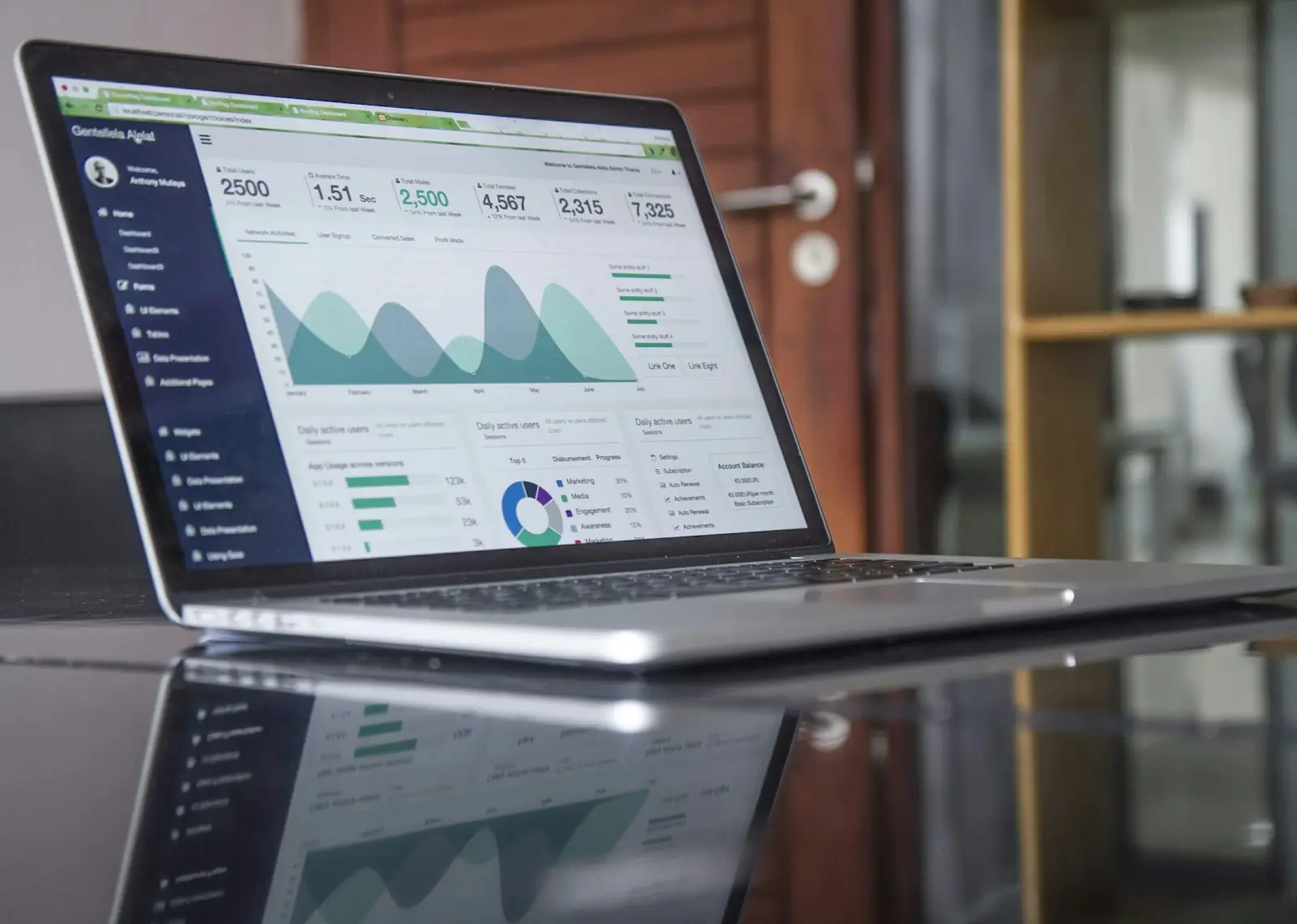
Rich reports and dashboards giving real-time operational visibility across delivery, people and cash.
04
The impact
| Measure | Before | After |
|---|---|---|
| HR system | Unscalable legacy HRMS | Full employee lifecycle platform |
| Project management | Straining under complexity | Aligned with the sales workflow |
| Accounting | On-premise legacy | Cloud ledger, integrated |
| Expense management | Ad hoc | Policy-driven |
| Payroll accuracy | Manual dependencies | Improved through integration |
| Management visibility | Absent | Real-time dashboards |
| Existing Salesforce and LMS | Isolated | Integrated into the operation |
Beyond the numbers
- Operational efficiency rose by aligning project management with the sales workflow. Delivery and commercial teams work from the same record.
- Employee satisfaction improved across the onboarding-to-separation journey. A continuous record removes the repeated form-filling that erodes new-hire experience.
- Decision-making became agile. Real-time visibility replaced monthly reconstruction.
05
What comes next
The engagement continues. These are the next moves on the table.
- Utilization and realization analytics by project and practice.
- Automated revenue recognition against project milestones.
- Capacity planning driven by pipeline and delivery data together.
Engagement delivered by the Ideentrix founding team. Technologies, scope and outcomes as recorded at project close, published with the client's consent.